

 русский
 Español
 Deutsch
 عربى
 Português
 Français


 Oct 29, 2026
Which Single Phase Electric Winch and Portable Electric Hoist Fits Your Lifting Job
Content
- 1 How to Choose a Single Phase Electric Winch
- 2 Single Phase vs Three Phase Electric Winch
- 3 Portable Electric Hoists vs Manual Chain Hoists
- 4 Explore the Product Series
- 5 Which Portable Electric Hoists Suit Stages, Glass and Workshops
- 6 Which Is Better, Brushless or Brushed Mini Electric Winch
- 7 Why Work With a Manufacturer for OEM and Private Label Projects
- 8 Final Selection Checklist
Direct Answer
For most workshops, stages and building sites that run on ordinary single phase power, the best choice is a single phase electric winch or portable electric hoist rated at least 25 percent above your heaviest load, with variable speed control and a brushless motor. Use a winch when you need flexible rigging and pulling. Use a mini electric hoist when you need clean, repeatable vertical lifting. The sections below show how to match capacity, speed, duty and power supply to your job, with real numbers you can check against your own project.
How to Choose a Single Phase Electric Winch
A single phase electric winch is a compact lifting and pulling machine that runs from a standard wall supply, so it needs no special three phase installation. That makes it the first choice for event crews, installers, maintenance teams and small factories. Choosing well comes down to four checks: load, speed, duty and supply.
Start with the heaviest load
Weigh everything that hangs on the rope, including rigging, hooks, pulleys and any tools. A simple example: a 1.5 m by 1.0 m sheet of 10 mm glass weighs about 37 kg, and with suction cups, a frame and a safety margin the real load can pass 80 kg. A winch rated at 170 kg then leaves a comfortable reserve. Always pick a rated capacity at least 25 percent above the heaviest expected load, and remember that multi-part pulley systems change both the force and the lifting speed.
Match speed to the work
Speed decides how long a lift takes. At 8 m per minute, a 12 m lift takes 90 seconds. At 3 m per minute the same lift takes 4 minutes. Fast lines save labor on repeated lifts, while slow, precise speeds protect fragile loads during final positioning. This is why a variable speed electric winch is so popular with installers: it runs fast when the load is clear and slows down for careful placement.
Check duty rating and power supply
Mini winches are built for short working cycles, not nonstop operation. Read the duty rating on the nameplate and allow cooling time between long runs. Then check the circuit. For example, a 250 kg load lifted at 8 m per minute needs about 330 W of mechanical power. With typical drive losses the electrical draw is around 550 W, which is roughly 2.4 A on a 230 V supply, so a standard single phase circuit handles it easily.
Safety Reminder
Standard mini winches and hoists are designed for lifting materials and equipment. Do not use them to lift people unless the machine is specifically designed, rated and certified for that purpose. Never stand under a suspended load.
Single Phase vs Three Phase Electric Winch
Direct answer: choose single phase when your site has ordinary mains power and your loads stay within the light to medium range. Choose three phase only when you run heavy, continuous lifting and already have three phase supply installed.
| Factor | Single Phase Winch | Three Phase Winch |
| Power source | Standard wall socket | Dedicated three phase supply |
| Typical load range | Light to medium, about 100 to 500 kg | Medium to heavy, often above 500 kg |
| Site setup | Plug in and work | Needs qualified wiring and phase checks |
| Portability | Excellent, compact and light | Usually bulkier and fixed to a location |
| Best fit | Stages, installation, repair, small plants | Continuous industrial lifting |
Why single phase wins for mobile work
Mobile teams rarely control the power supply at each venue. A theatre loading dock, a rooftop, a shop front or a temporary exhibition hall almost always offers single phase sockets. A single phase electric winch removes the need for cable changes, phase testing or generators, which saves setup time on every job. If a crew moves between three sites in a day, those saved minutes add up quickly.
When three phase still makes sense
Fixed production lines with long, heavy and continuous duty cycles benefit from three phase motors because the load is spread across the supply more evenly. If your daily lifting stays under 500 kg and the work is intermittent, that advantage rarely matters.
Portable Electric Hoists vs Manual Chain Hoists
Direct answer: portable electric hoists are better whenever you lift often, lift high, or care about speed and operator fatigue. Manual chain hoists remain useful only for rare, short lifts where no power is available.
Mini Electric Hoist
Push-button control, steady lifting speed, low operator effort, consistent results on repeated lifts, and a 12 m lift finished in about 90 seconds at 8 m per minute.
Manual Chain Hoist
No power needed, but every lift depends on hand effort. A worker averaging 1.5 m per minute needs about 8 minutes for the same 12 m, and fatigue grows with load and height.
The real cost is time and risk
A job that needs 20 lifts of 6 m each takes about 15 minutes of pure lifting with an 8 m per minute electric hoist. A manual hoist at 1.5 m per minute needs 80 minutes. Longer manual effort also increases the chance of rushed handling and uneven loads, which matters when the cargo is glass, signage, lighting trusses or machine parts.
Where a mini electric hoist excels
Models such as the H2.5, H5 and H10 mini electric hoists are made for hanging and lifting structures, curtain-wall glass and advertising boards. Their compact body is easy to carry up a ladder, clamp to a beam and relocate in minutes.
Explore the Product Series
Mini Winches and Mini Hoists for Real Jobs
Nantong Powerful Hoist Machinery Co., Ltd. develops hoists and winches from sketch design through 3D engineering, mold making, certification and mass production. Browse the range below and open any model for details.
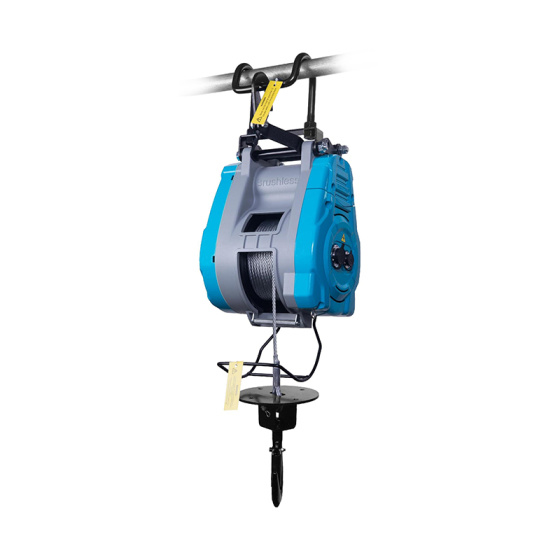 Model BL170 Mini Brushless Electric Winch Brushless Mini Electric Winch
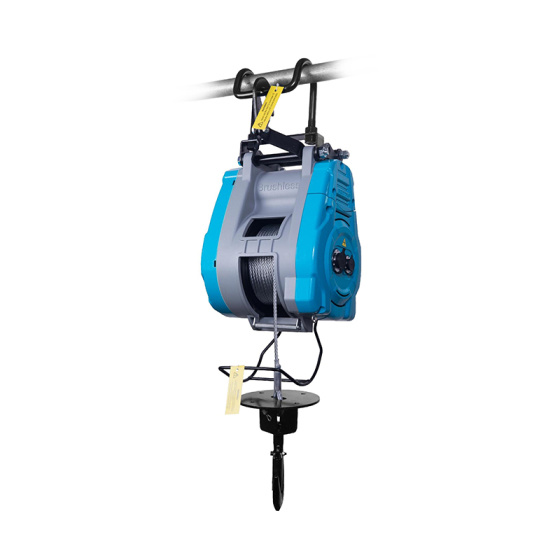 Model BL260 Mini Brushless Electric Winch Brushless Mini Electric Winch
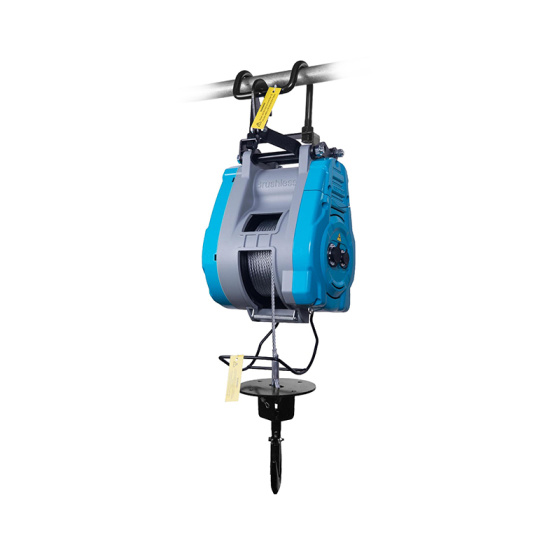 Model BL340 Mini Brushless Electric Winch Brushless Mini Electric Winch
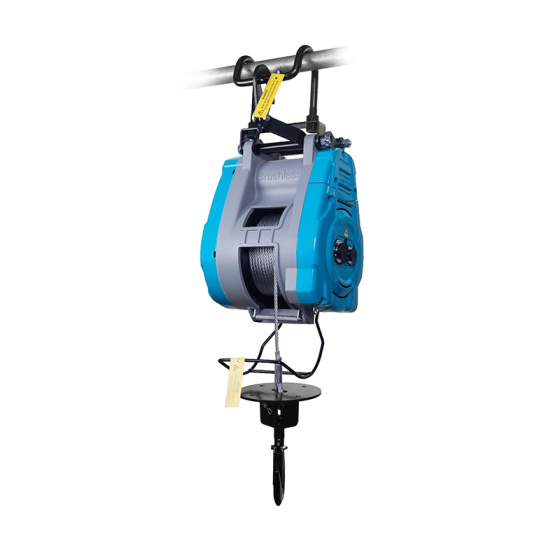 Model BL490 Mini Brushless Electric Winch Brushless Mini Electric Winch
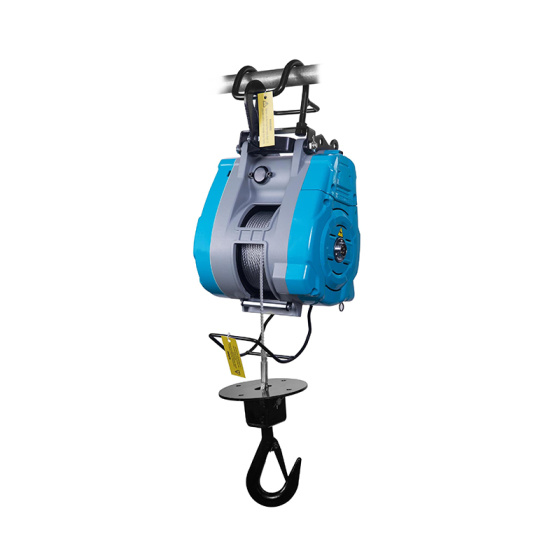 Model NS160/230 Mini Brushless Electric Winch Mini Electric Winch
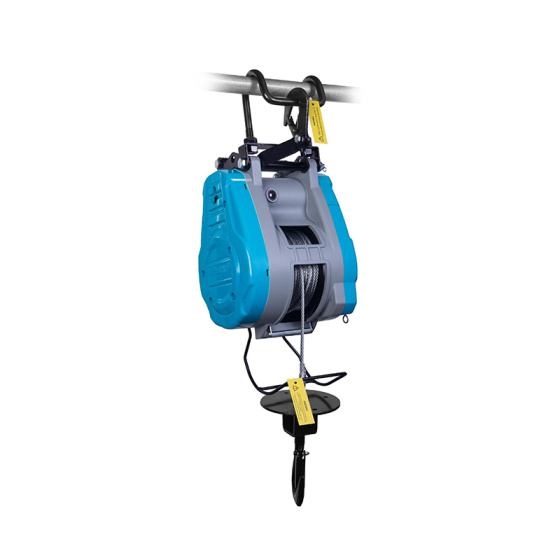 Model NS360/500 Mini Brushless Electric Winch Mini Electric Winch
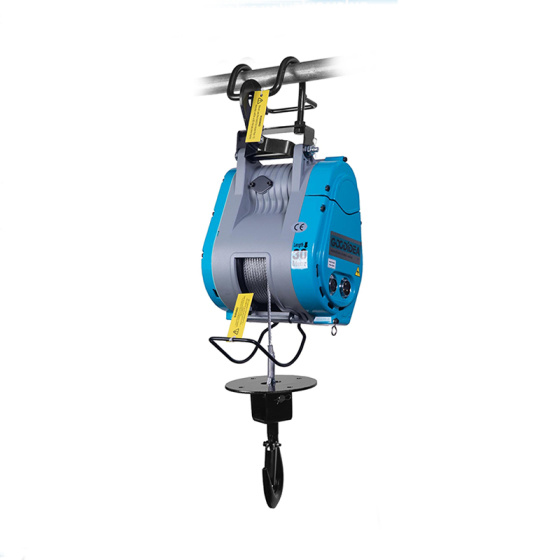 Model CM170/240 Mini Electric Winch Mini Electric Winch
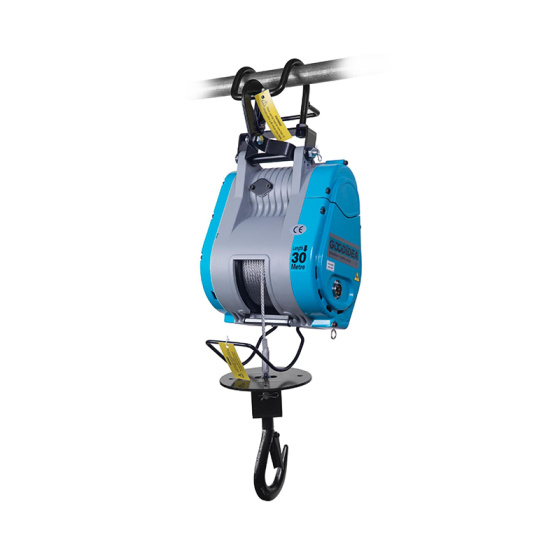 Model CS170/240 Mini Electric Winch Mini Electric Winch
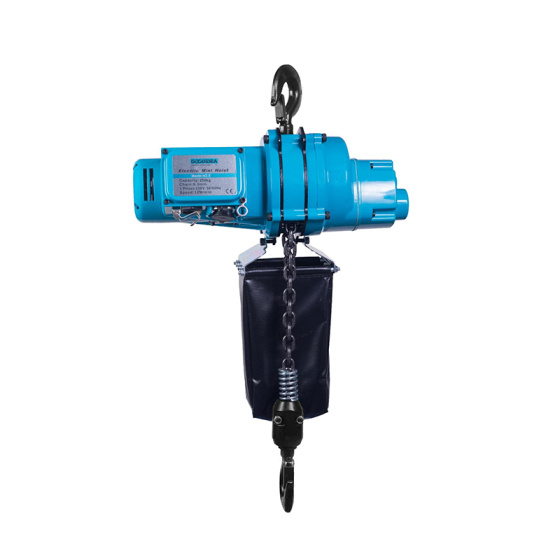 Model H2.5 Mini Electric Hoist Mini Electric Hoist
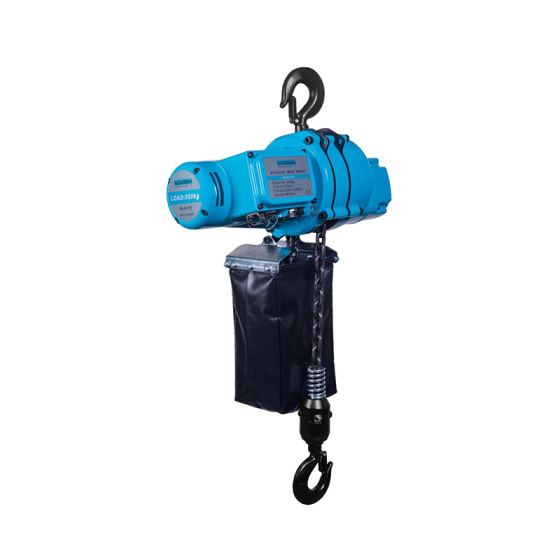 Model H5 Mini Electric Hoist Mini Electric Hoist
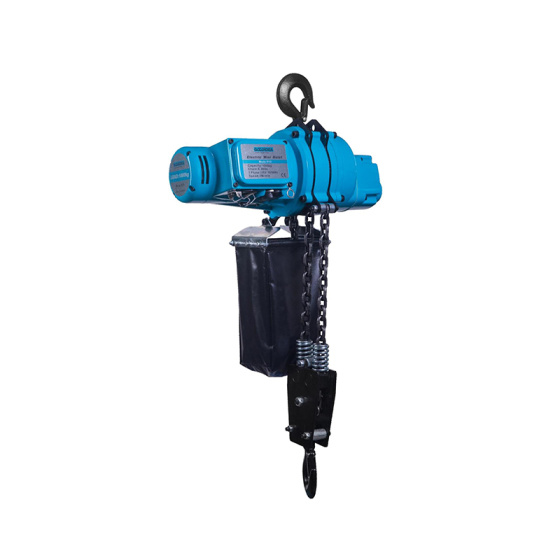 Model H10 Mini Electric Chain Hoist Mini Electric Hoist
Which Portable Electric Hoists Suit Stages, Glass and Workshops
Direct answer: pick the hoist by the job type first, then by capacity. Light stage and signage work fits the smaller models, glass and facade work benefits from fine speed control, and workshops value fast, repeatable cycles.
Stage and event rigging
Lighting bars, speaker clusters and backdrops are hung, trimmed and struck within hours. A portable hoist that sets up in minutes and lifts smoothly keeps the schedule on track. Look for quiet running, a clear control pendant and reliable limit protection. A typical truss section with lights can weigh 60 to 120 kg, so a 170 kg class machine already provides a healthy margin.
Curtain-wall glass and advertising boards
Glass panels and large boards need slow, controlled movement near the final position. Variable speed lets the installer approach quickly, then creep the last 20 cm. This reduces edge chips and alignment rework, both of which are costly on facade projects.
Workshops and maintenance bays
Engine blocks, gearboxes, motors and machine parts are heavy but not huge. A hoist at 250 to 500 kg handles many of them. Repeated lifts of 2 to 3 m are done in under 30 seconds at 8 m per minute, which keeps repair jobs moving.
| Application | Typical Load | Suggested Capacity Class |
| Light stage truss | 60 to 120 kg | 170 to 240 kg |
| Glass panel installation | 40 to 150 kg with fittings | 260 to 340 kg |
| Advertising board hanging | 50 to 200 kg | 260 to 340 kg |
| Workshop machine parts | 150 to 400 kg | 360 to 500 kg |
Which Is Better, Brushless or Brushed Mini Electric Winch
Direct answer: a brushless mini electric winch is the better long-term choice for frequent use, because it runs cooler, wears less and holds speed more consistently. A brushed model can still serve occasional, light-duty tasks.
What changes in daily use
Brushless motors have no carbon brushes to wear out, so there is less maintenance and less dust inside the housing. They also tend to deliver better efficiency, which means more lifting per unit of electricity and less heat during longer working days. For a crew using the winch daily, fewer service stops translate directly into more productive hours.
Why variable speed matters
A variable speed electric winch lets the operator match the pace to the load. Slow speed for placing a glass panel, fast speed for returning an empty hook. Combined with a brushless motor, this gives smooth starts and stops that reduce swing on the load and strain on the rigging.
Brushless Models
BL170, BL260, BL340 and BL490 cover 170 kg to 490 kg. Best for frequent use, longer shifts and projects where smooth control is important.
Standard Mini Winches
CM and CS models at 170 kg and 240 kg suit lighter, occasional tasks where simple operation is the priority.
Why Work With a Manufacturer for OEM and Private Label Projects
Direct answer: a direct manufacturer shortens development time and keeps quality under one roof. Nantong Powerful Hoist Machinery Co., Ltd. covers design, 3D engineering, mold making and certification, and its customers include one of the largest power tool brands in the world.
Buyer Tip
When you plan a private label electric winch, prepare four items before the first call: target capacity, lifting speed, duty cycle and the markets where the product will be sold. This helps the engineering team confirm certification needs and tooling early, and avoids redesign later.
What a good supplier should provide
Look for clear rated capacity data, stable production capability, certification support and a team that can adapt housings, cable lengths, control pendants and labeling to your market. A manufacturer that owns its mold making can modify parts faster than one that outsources tooling.
Final Selection Checklist
Use this short list before you decide on a single phase electric winch or portable electric hoist.
Weigh the heaviest load with all rigging and add at least 25 percent reserve.
Choose the lifting speed and decide whether variable speed is needed.
Confirm the duty rating and your available single phase supply.
Select brushless for frequent use, or a standard model for occasional tasks.
Match the product to the job: winch for flexible rigging, hoist for repeated vertical lifts.
Single phase electric winches and portable electric hoists continue to replace manual methods because they save time, protect loads and cut operator fatigue. To compare models by capacity or discuss an OEM project, visit the product center or request the catalogue through the contact page.
 CategoryRecent Post

- +86-13606283881 +86-0513-83278989
- [email protected]
- 19 Group, Xining Village, Tianfen Towen, Qidong City, Jiangsu, China
Copyright © Nantong Powerful Hoist Machinery Co., Ltd. All Rights Reserved.
OEM AC Electric Winch Manufacturer
Portable Electric Hoist Factory
