

 русский
 Español
 Deutsch
 عربى
 Português
 Français


OEM – Original Equipment Manufacturer
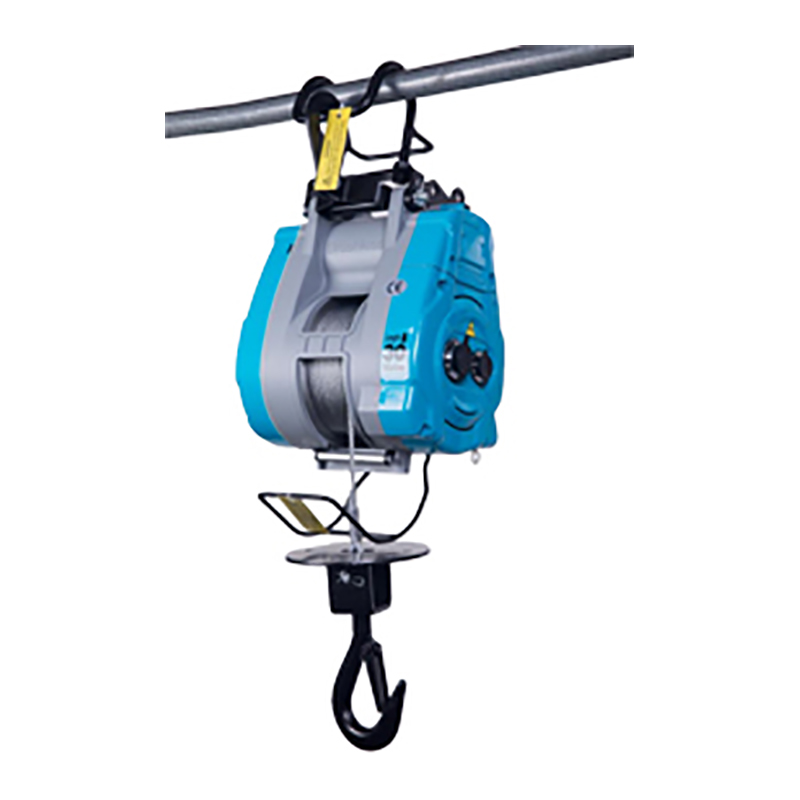
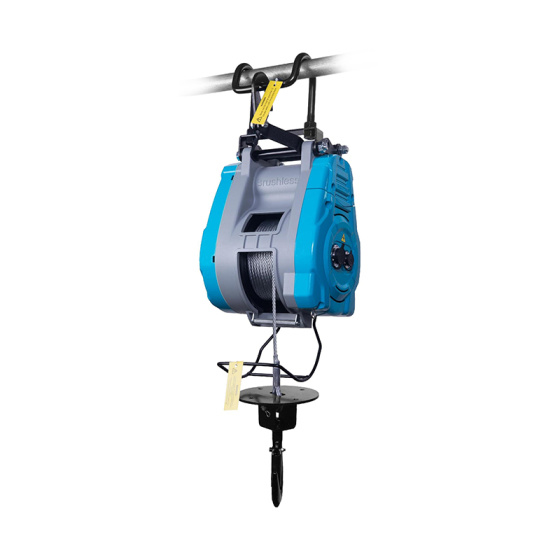
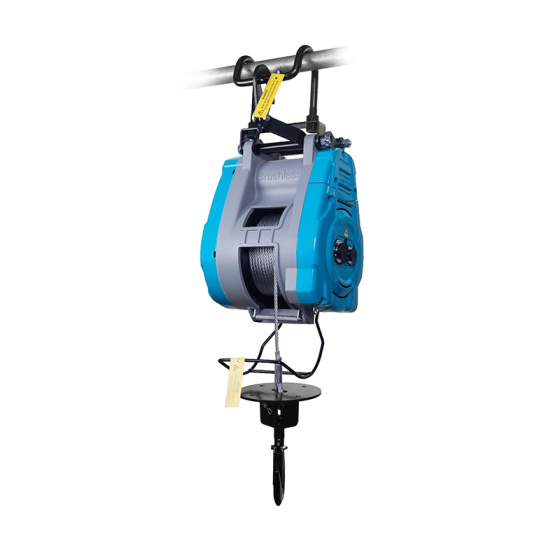
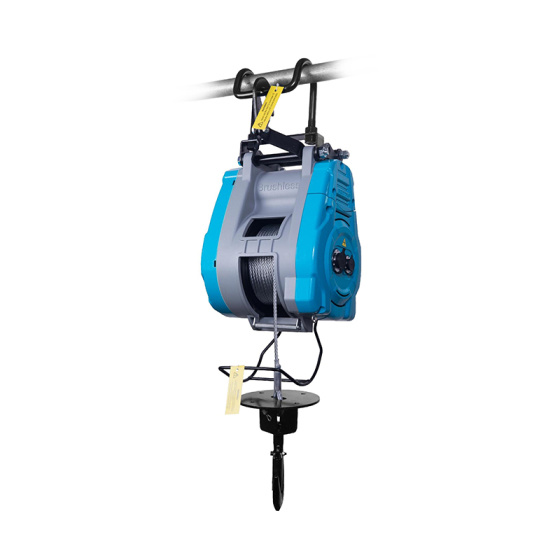
We develop a complete range of hoists & winches from sketch design to mass production, covering all aspects from design, 3D engineering, mold making and certification.
Our customers include one of the largest and most influential power tool brands in the world. Welcome to visit Nantong to experience it for yourself.

Request our Product Catalogue
Receive our product catalog by email for more details about our machines.
REQUEST CATALOGUEBrushless Mini Electric winch Industry knowledge
A procurement guide for importers, distributors and tool brands
To choose a brushless electric winch, start with its intended use, then compare rated capacity, duty cycle, power supply, load control and service support. A brushless motor removes the need to replace carbon brushes, but it does not by itself establish lifting suitability, continuous-duty performance or the service life of the complete machine.
For a distributor or private-label brand, the best fit is a product that matches customers' working conditions and can be supported after delivery. This guide explains which questions to resolve before comparing quotations or approving an OEM sample.
Confirm whether the job is lifting or pulling
The word "winch" is used for different products. A vehicle recovery winch, a material-lifting winch and an electric hoist should not be treated as interchangeable. For vertical lifting, select equipment whose manufacturer explicitly permits that application and provides the relevant rated capacity, installation instructions and operating limitations.
Describe the load, travel direction, mounting arrangement and working environment in your enquiry. Ask the supplier to confirm the proposed model's suitability in writing. Do not infer a lifting rating from a pulling-force figure, a product photograph or the presence of a hook. This guide concerns material handling, not lifting people.
Understand what a brushless motor changes
A brushless drive uses electronic commutation rather than carbon brushes to switch current in the motor. Removing brush wear eliminates one maintenance task. The motor and controller can also be designed for adjustable speed, but the available speed range and behaviour under load depend on the complete drive system.
The rest of the machine still matters. Bearings, gears, the brake, wire rope and electrical connections require inspection or service according to the manual. "Brushless" should therefore not be presented as "maintenance-free winch". Nor does it automatically establish lower noise, greater efficiency or a longer warranty than every brushed alternative.
When comparing brushed and brushless models, request results under comparable load and operating conditions. Consider the initial price alongside service intervals, replacement-part costs and the time required to diagnose a fault. A brushless platform is most useful when its practical benefits match the customer's application.
Compare the operating conditions behind the rating
Two machines with the same advertised capacity can suit very different work patterns. Use the following checks to make quotations comparable.
Rated load and configuration
Specify the maximum load the equipment must handle, including relevant attachments. Confirm the rated capacity for the actual rope arrangement and mounting configuration. Where capacity depends on rope layers or reeving, obtain the applicable rating rather than using a single headline number. Do not select a larger model solely on the assumption that extra capacity guarantees a longer service life.
Duty cycle and frequency of use
Tell the supplier how often the equipment will start, how long it will run, the typical load and the expected ambient temperature. Ask for the permitted duty cycle and its stated conditions. Occasional installation work and repeated material handling throughout a shift can require different equipment even when the maximum load is identical. A brushless motor alone is not proof of continuous-duty capability.
Power supply and controls
Confirm voltage, frequency, phase, plug requirements and the power supply available at the installation site. Do not assume that one version works on both 110 V and 220 V, or that every model is suitable for both 50 Hz and 60 Hz. Request the specification for the exact version being quoted.
For variable-speed equipment, ask for the lifting and lowering speed ranges under load, not just a no-load demonstration. Establish how the controls respond during starting, stopping and positioning. This makes the discussion more useful than asking only whether a model has "smooth operation".
Load holding and protective functions
Ask how the model holds a load when stopped and what happens if power is lost. Review the documented functions and limitations of its brake, travel limits, emergency stop and any overload or thermal protection. These functions address different risks and should not be treated as substitutes for one another. Request qualified testing against an agreed procedure; do not improvise overload or fault tests.
Environment and service access
Explain whether the product will operate indoors, outdoors, in dust or near moisture. Verify the protection rating and environmental restrictions for the complete unit, controls and connectors. A metal housing does not establish weather resistance. Ask which service parts are available, how they are identified and whether replacement requires special tools or programming.
An example of a useful enquiry
"We are evaluating a compact electric winch for material lifting. Please review our maximum load including attachments, required travel, lifts per hour, supply voltage and installation arrangement. Confirm a suitable model, its permitted duty cycle, control options, operating restrictions and the documents available for our destination market."
Adding these details allows suppliers to identify mismatches before a sample is ordered. It also creates a common basis for comparing price and performance.
Approve the product before expanding the range
For an OEM or private-label project, separate branding changes from changes to the electrical or mechanical design. A label or packaging change is different from a new controller, voltage version, rope arrangement or load rating. Agree which changes are feasible, what validation they require and how they affect price, lead time and documentation.
Before sample approval, define the acceptance criteria and request the relevant specification, operating instructions and test evidence for that configuration. Check that documents identify the model being supplied. Plan spare parts, warranty responsibilities and change notification before placing a volume order. Do not assume that documentation for one model covers an entire product family.
Discuss a brushless winch project with GOODIDEA
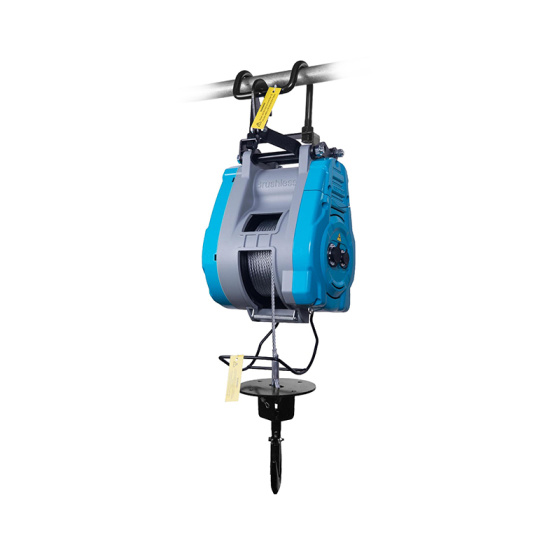
GOODIDEA HOIST is the brand of Nantong Powerful Hoist Machinery Co., Ltd., a manufacturer of electric hoists and winches in China. Our brushless mini electric winch range provides a starting point for buyers evaluating a standard product or an OEM project.
Send us your application, target market, required load, power supply, operating frequency and expected order volume. Include any branding or design requirements so we can discuss the appropriate product and the scope of a quotation. Confirm the final configuration, specifications and supporting documents before approving a sample or purchase order.
Frequently asked questions
Q
Does a brushless electric winch need maintenance
Yes. It has no carbon brushes to replace, but the complete machine still needs the inspections and servicing specified in its manual. Brushless motor technology does not remove wear from the rope, brake, bearings or gears.
Q
Can any electric winch lift a suspended load
No. Use only equipment explicitly specified for the intended lifting application. Some winches are designed for pulling and must not be used as hoists. Verify the exact model's instructions and rating before selection.
Q
Does brushless mean continuous duty
No. Continuous or intermittent operation depends on the complete machine's rating and operating conditions. Ask for the duty-cycle specification, load assumptions and ambient-temperature limits.
Q
What information should an importer send for a quotation
Provide the application, maximum load, travel distance, use frequency, mounting arrangement, supply voltage and destination market. Add forecast volume, branding needs and required service support for an OEM or private-label enquiry.

- +86-13606283881 +86-0513-83278989
- [email protected]
- No.101, Group 8, Zhiliangqiao Village, Hezuo Town, Qidong City, Jiangsu Province, P.R.China
Copyright © Nantong Powerful Hoist Machinery Co., Ltd. All Rights Reserved.
Brushless Portable Electric Winch Manufacturer
OEM Small Brushless Electric Winch Supplier
