

 русский
 Español
 Deutsch
 عربى
 Português
 Français


 Oct 27, 2026
Brushless vs Brushed Electric Winch: Which Should You Pick?
Content
- 1 The Short Answer: Which Motor Wins
- 2 How the Two Motors Work
- 3 Brushless vs Brushed: Side by Side
- 4 Efficiency and Power Use
- 5 Lifespan and Maintenance
- 6 Brushless Mini Winch Series
- 7 Real Lifting Jobs: Where the Difference Shows
- 8 Capacity Guide for Brushless Mini Winches
- 9 Common Myths About Brushless Winches
- 10 Buying Checklist
- 11 Final Takeaway
A brushless electric winch is the better choice for most regular lifting work. It runs cooler, wastes less power, needs no brush replacement and holds up better under repeated starts and stops. A brushed winch still makes sense for occasional, light, low-budget use where the machine sits idle most of the year. The rest of this article explains why, with figures, a side-by-side table and a capacity guide.
The Short Answer: Which Motor Wins
If your winch works more than a few hours each week, choose brushless. If it works a few hours each month, a brushed unit can still do the job. The deciding factors are duty cycle, service access and how costly downtime is on your site.
The efficiency figures above are general industry ranges. Real results depend on motor design, load and operating temperature, but the gap between the two technologies is consistent across the market.
How the Two Motors Work
Brushed motor basics
A brushed motor passes current through carbon brushes that press against a rotating commutator. The brushes switch the current direction as the rotor turns. This design is simple and cheap to build, which is why it has been used in winches for decades. The cost of that simplicity is friction, sparking and wear at the brush contact point.
Brushless motor basics
A brushless motor removes the brushes and commutator. An electronic controller switches the current in the stator windings, and permanent magnets on the rotor follow the magnetic field. With no sliding electrical contact, there is far less friction, far less heat and no brush dust inside the housing.
The motor itself is not the only difference. A brushless winch carries a controller board, so it can offer smoother starts, speed control and built-in protection against overload and overheating.
Brushless vs Brushed: Side by Side
| Factor | Brushless | Brushed |
|---|---|---|
| Efficiency | About 85-90% | About 75-80% |
| Wear parts | Bearings only | Brushes and commutator |
| Heat under load | Low to moderate | Moderate to high |
| Noise level | Quieter, smoother hum | Louder, with brush noise |
| Sparking | None at the motor | Visible at the brush contact |
| Start and stop control | Electronic, precise | Basic |
| Best fit | Frequent, repeated lifting | Occasional light duty |
Efficiency and Power Use
A brushed motor loses energy as friction at the brushes and as heat in the commutator. A brushless motor loses much less. For a winch, this shows up in three ways.
- Less electrical energy is needed for the same lifting work.
- The motor stays cooler, so it can run longer before a thermal cutout.
- On battery or generator supply, the same source can support more lifts.
Suppose a winch needs 600 watts of mechanical output during a lift. At 88% efficiency, a brushless unit draws about 682 watts. At 77% efficiency, a brushed unit draws about 779 watts. That is close to 100 watts of extra draw for every lift, all of which turns into heat. Over a full working day, the difference in heat and supply load becomes easy to notice.
Lifespan and Maintenance
The brush replacement cycle
Carbon brushes wear down with every minute of operation. Depending on load and quality, a set of brushes may last from roughly 50 hours to several hundred hours. When they wear out, the winch loses power, sparks heavily or stops. Replacing them means opening the motor housing, checking the commutator and often cleaning carbon dust from inside.
What brushless changes
A brushless motor has no brushes to replace. The routine checks shift to the parts that matter for safety in any winch: the wire rope, the hook, the brake, the switch and the housing. That is a simpler maintenance plan, and it is easier for site teams to follow consistently.
Brushless Mini Winch Series
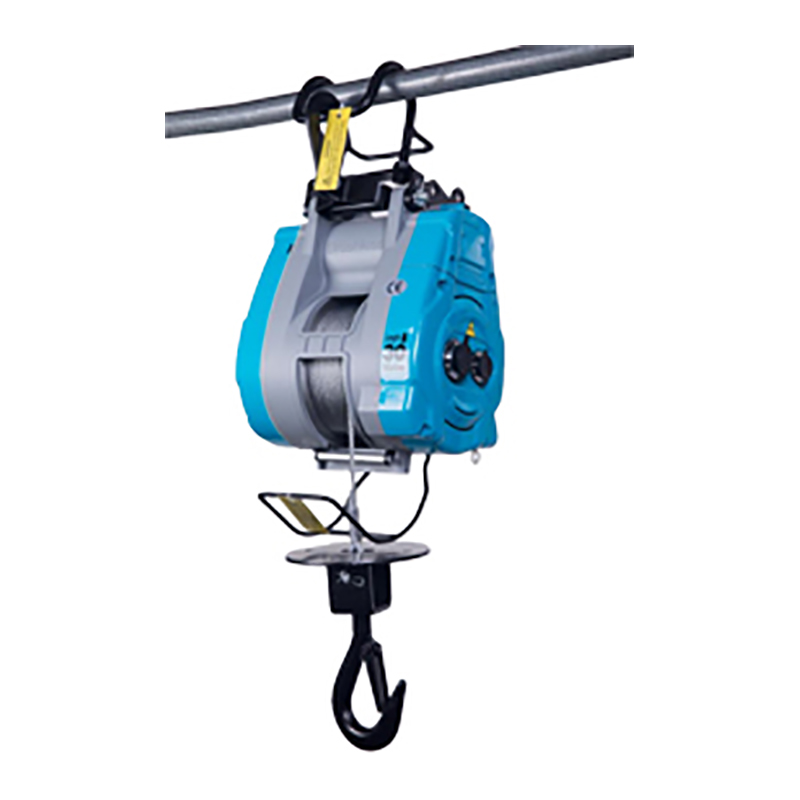
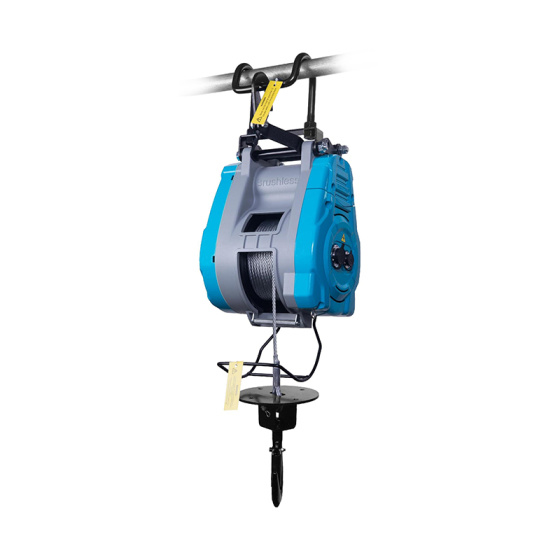
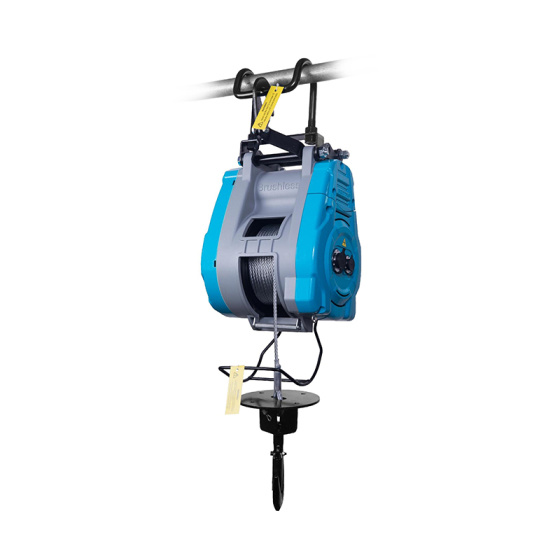
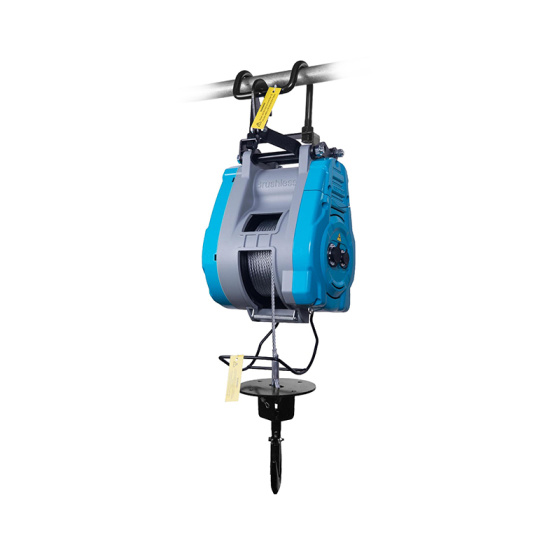
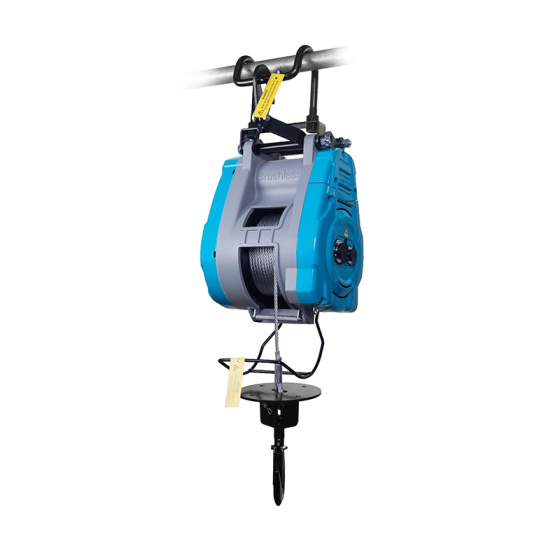
If you are comparing motor types for a real project, it helps to see what a brushless range looks like in practice. Nantong Powerful Hoist Machinery Co., Ltd. offers a compact brushless mini electric winch series with capacities from 170 kg to 490 kg. Select a model below to view details.
Brushless Mini Electric Winch Range
Compact winches built around brushless motors for hanging, lifting and positioning work. Choose the capacity that fits your load.
Real Lifting Jobs: Where the Difference Shows
Curtain wall glass and facade panels
Installers lift many panels a day, each with a start, a slow approach and a stop. Brushless control gives smoother starts and more precise positioning, which reduces swing and makes final alignment easier. The quieter motor also helps in occupied buildings.
Advertising boards and hanging structures
Signs, banners and light structures are often raised and lowered repeatedly during setup and teardown. These are exactly the repeated duty cycles that wear brushes quickly and heat up a brushed motor.
Workshop and garage lifting
For a small shop that lifts an engine part or a heavy fixture once in a while, a brushed winch can be enough. The motor will not accumulate many running hours, so brush wear is rarely an issue.
Choose brushless when
- You lift several times per hour
- The winch works most days of the week
- Smooth, controlled movement matters
- Downtime on site is costly
- Noise must stay low
Choose brushed when
- Use is occasional and light
- The winch is a backup unit
- Your team already stocks spare brushes
- The task does not need fine control
- Annual running time stays very low
Capacity Guide for Brushless Mini Winches
Motor type is only half of the decision. The rated capacity must match your heaviest load with a sensible safety margin. The table below maps the listed capacities to typical task sizes.
| Model | Rated capacity | Typical use |
|---|---|---|
| BL170 | 170 kg | Light signs, small panels, workshop tasks |
| BL260 | 260 kg | Advertising boards, medium fixtures |
| BL340 | 340 kg | Glass panels, equipment positioning |
| BL490 | 490 kg | Heavier structures, larger curtain wall units |
Pick a winch whose rated capacity is clearly above your real load, including slings, hooks and any rigging. For example, a 200 kg panel with 20 kg of rigging is a 220 kg job, so a 260 kg model is a more comfortable match than a 170 kg model. Always follow local lifting regulations and the manufacturer manual.
Common Myths About Brushless Winches
Myth: brushless winches are always stronger
Not exactly. Rated capacity comes from the whole design, including gearing, rope, brake and frame. Brushless technology improves efficiency, control and service life, but it does not by itself raise the load limit.
Myth: brushed winches are unsafe
A well-built brushed winch with a working brake and proper protection is safe to use within its rating. The difference is in wear and upkeep, not in basic safety.
Myth: electronics make brushless winches fragile
Modern controllers are sealed and tested for vibration, dust and temperature. In many cases the controller adds protection, because it can cut power during overload or overheating before damage occurs.
Buying Checklist
- Write down your heaviest real load, including all rigging.
- Estimate how many lifts you make per hour and per week.
- Decide whether smooth speed control and low noise matter on your site.
- Confirm that the winch has a reliable brake and overload protection.
- Ask about OEM options if you need custom labelling, packaging or specifications.
- Check what documents and certification the supplier can provide.
Final Takeaway
For most users, the brushless vs brushed electric winch question comes down to how often the winch works. Frequent, repeated lifting favors brushless for its higher efficiency, cooler running, quiet operation and lack of brush wear. Occasional light use can still be served by a brushed unit. If your work involves regular hanging and lifting, the brushless mini electric winch range above is the logical place to start, and the 170 kg to 490 kg capacity steps make it simple to match a model to your load.
Need help choosing a capacity or an OEM configuration? Contact the Nantong Powerful Hoist team through the contact page for a product catalogue and technical guidance.
Request Catalogue CategoryRecent Post

- +86-13606283881 +86-0513-83278989
- [email protected]
- 19 Group, Xining Village, Tianfen Towen, Qidong City, Jiangsu, China
Copyright © Nantong Powerful Hoist Machinery Co., Ltd. All Rights Reserved.
OEM AC Electric Winch Manufacturer
Portable Electric Hoist Factory
