

 русский
 Español
 Deutsch
 عربى
 Português
 Français


OEM – Original Equipment Manufacturer
We develop a complete range of hoists & winches from sketch design to mass production, covering all aspects from design, 3D engineering, mold making and certification.
Our customers include one of the largest and most influential power tool brands in the world. Welcome to visit Nantong to experience it for yourself.

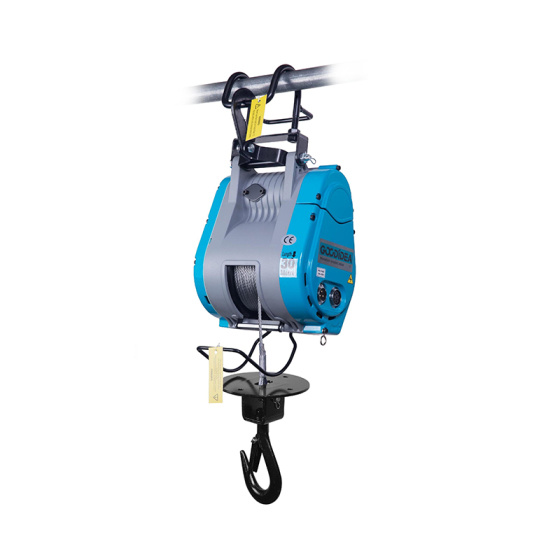
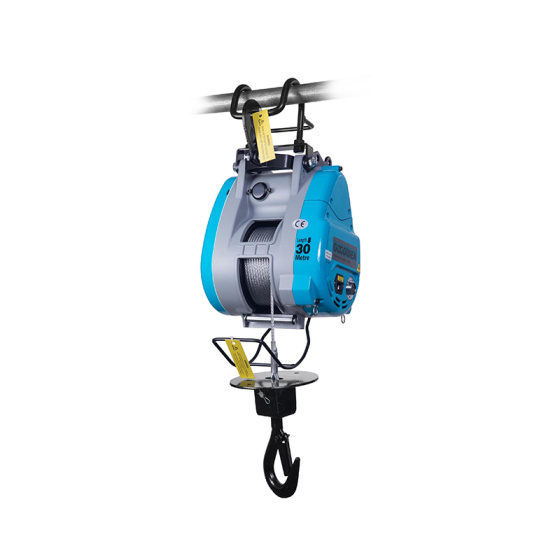
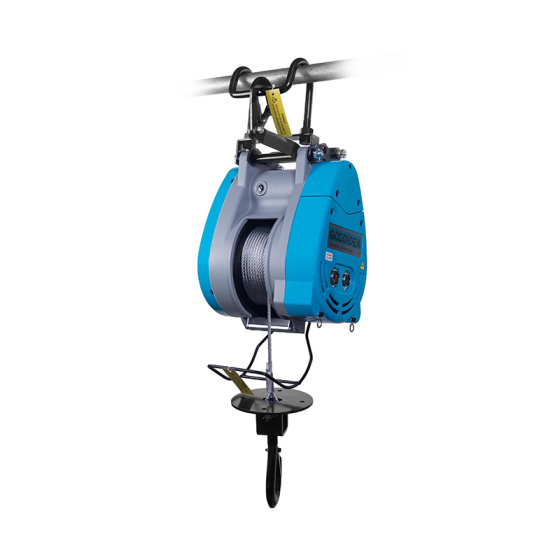
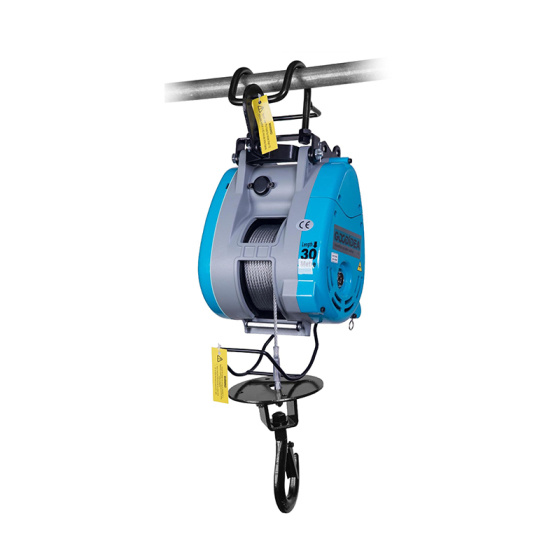
Request our Product Catalogue
Receive our product catalog by email for more details about our machines.
REQUEST CATALOGUEProducts Industry knowledge
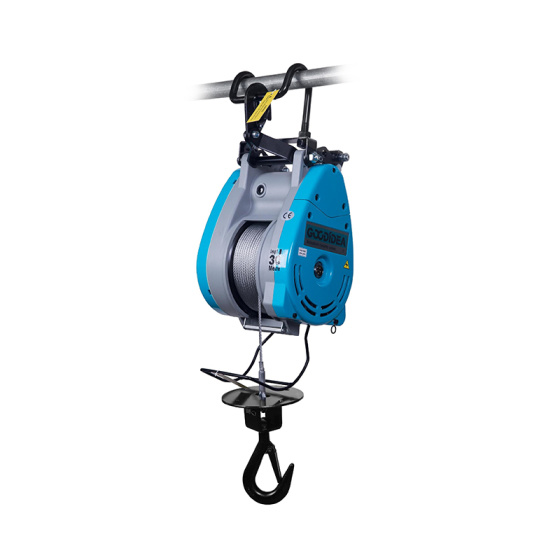
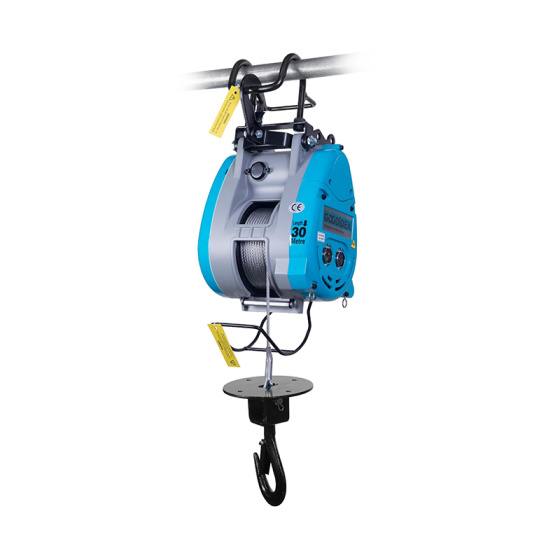
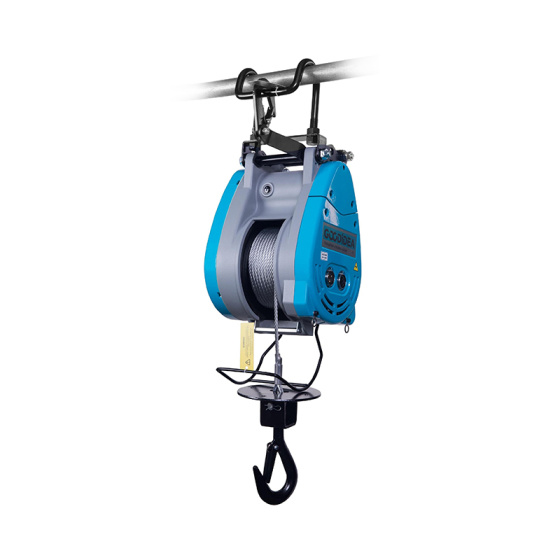
A single phase electric winch and a set of portable electric hoists cover most compact lifting jobs where a crane is too large and three-phase power is not on hand. GOODIDEA builds both product types in its Qidong factory under the Goodidea line, from brushless mini electric winches in the 160 kg to 500 kg class to mini electric chain hoists rated at 250 kg, 500 kg and 1000 kg. Buyers looking for a variable speed electric winch, wholesale portable electric hoists or a private label electric winch manufacturer will find the full range backed by OEM service, 110V and 220V single phase options and a documented test routine.
Direct Answer: Which Machine Fits Which Job
The short answer is simple. For lifting or pulling up to 500 kg on a single phase supply, pick a winch from the NS, CS, CT or BL families. For a load that hangs directly below the hook and reaches 1000 kg, pick a chain hoist from the H series. The product page of GOODIDEA sorts the catalog into four groups, shown below with the models that carry published specifications.
Brushless Mini Electric Winch
BL170, BL260 (260 kg), BL340 (340 kg) and BL490 (490 kg). The BL490 pairs a 2800 W motor with a 5-16 m/min speed range.
Mini Electric Winch
NS160/230, NS360/500, CM, CS and CT170/240, plus the M, S and T series that reach 160 kg to 500 kg in two or three capacity steps.
Mini Electric Hoist
H2.5 at 250 kg, H5 at 500 kg and H10 at 1000 kg, all with a brushless motor, aluminum housing and SCM control.
Electric Tools
A separate product group listed beside the winches and hoists on the same product page.
Single Phase Electric Winch Models Compared
Every winch below runs on single phase power. The standard supply is 220V 50/60Hz, and the brushless winch family is also offered with 110V single phase. GOODIDEA publishes rated load, motor power, line speed, rope and net weight for each model, so the figures can be compared side by side. The last column is a simple calculation, rated load divided by net weight.
| Model | Rated load | Motor | Line speed | Wire rope | Net weight | Load to weight |
|---|---|---|---|---|---|---|
| NS160 | 160 kg | 1300 W | 19 m/min | 5 mm x 30 m | 16 kg | 10.0 to 1 |
| NS230 | 230 kg | 1500 W | 19 m/min | 5 mm x 30 m | 17 kg | 13.5 to 1 |
| CS170 | 170 kg | 1300 W | 19 m/min | 5 mm x 30 m | 17 kg | 10.0 to 1 |
| CS240 | 240 kg | 1600 W | 19 m/min | 5 mm x 30 m | 18 kg | 13.3 to 1 |
| NS360 | 360 kg | 1600 W | 13 m/min | 5 mm x 60 m | 24 kg | 15.0 to 1 |
| NS500 | 500 kg | 1800 W | 13 m/min | 6 mm x 30 m | 24 kg | 20.8 to 1 |
| BL490 | 490 kg | 2800 W | 5-16 m/min | 6 mm x 30 m | 24 kg | 20.4 to 1 |
Three readings stand out. First, the CT170/240 repeats the CS figures for load, speed, rope and weight, so one installation design can serve either family. Second, the NS360 and NS500 weigh the same 24 kg, yet the NS500 moves 140 kg more by moving to a 6 mm rope and an 1800 W motor, while the NS360 carries 60 m of rope, twice the length of its sibling. Third, the load to weight ratio climbs from 10 to 1 on the NS160 to 20.8 to 1 on the NS500, which means a heavier job does not always call for a much heavier machine to carry between work positions.
Portable Electric Hoists for Vertical Lifting
A chain hoist hangs above the load and lifts it straight up, which suits curtain-wall glass, advertising boards, structural members and goods moving onto racks or vehicle decks. GOODIDEA offers three capacities in this family, and the chain length is supplied to match the hook-to-hook lifting height written into each order. For horizontal pulling and dragging, the company points buyers to its mini electric winch range instead.
250kg
Model H2.5
The lightest hoist in the family, built on the same brushless motor, aluminum housing and SCM control as the larger models.
500kg
Model H5
1300 W motor, 6 m/min lifting speed and a 6.3 x 19 mm chain, with an upper hook travel limit and brake.
1000kg
Model H10
Top capacity of the family, with a 1300 W motor, 3 m/min lifting speed and the same 6.3 x 19 mm chain.
The H5 and H10 show the trade clearly. They share a 1300 W motor and a chain size, so doubling the rated load from 500 kg to 1000 kg halves the speed from 6 m/min to 3 m/min. In practice a 3 m lift with the H10 takes about 1 minute, which is slow enough to place glass or signage with care.
Variable Speed Electric Winch Control and Brushless Drive
Speed control is where these machines differ most from older capacitor-start units. The motor is a permanent magnet brushless maglev design, and the control circuit has no capacitor. An SCM board keeps the power factor high and uses plug and pull wiring, so a control board can be replaced without rewiring the motor. Stepless speed regulation lets the operator slow the hook near the set point, and the BL490 spans 5-16 m/min, so light loads move fast and fragile pieces creep into place. At the 19 m/min of the NS, CS and CT winches, paying out the full 30 m of rope takes about 1.6 minutes. GOODIDEA combines this control with motor windings of 200 degrees C enameled wire, and states an ED50 duty cycle on the CS170/240 and H10 pages.
5-16m/minstepless range on the BL490
200degrees Cenameled wire rating in the motor
3xgear strength versus ordinary gears
4xwire rope safety factor versus ordinary machines
Layered Braking and Protection
Safety on the winches comes from four layers that cover different faults, and the hoists carry a matching set. GOODIDEA also states plainly that these are material handling machines, not personnel lifts, and that protective devices do not replace operator training or routine inspection.
Layer 1Ratchet
A mechanical ratchet prevents drum reversal when power is removed.
Layer 2Short-circuit
Resistive short-circuit control from the brushless motor holds the load at once on power loss or a winch fault, with sintered brake material for steady friction.
Layer 3Limit switch
The switch stops the machine when the hook reaches the set lifting height or the rope runs in reverse.
Layer 4Motor guard
Temperature protection and overload protection are built into the winches. The hoists add an upper hook travel limit and a brake that controls lifting and lowering.
Capacity Ladder: Matching Load to Model
The bars below set representative models against the 1000 kg of the H10. Winches fill the lower and middle rungs from 160 kg to 500 kg, the H5 shares the 500 kg rung with the NS500, and the H10 stands alone at the top. A buyer sizing a wholesale order can read the ladder first, then confirm the rope or chain length, voltage and duty profile with the factory.
Wholesale and Private Label Supply Process
As a private label electric winch manufacturer, GOODIDEA develops hoists and winches from sketch design to mass production, covering design, 3D engineering, mold making and certification. Its customer list includes one of the largest power tool brands in the world. For wholesale portable electric hoists and winches, private label work can include brand marking, custom cartons, multilingual manuals and inspection documentation, and the company runs standard and private label versions on the same production line with the same quality checks.
1Send the working point
Load, lifting height, voltage and frequency, duty profile, mounting and control preference.
2Confirm the build
Part number, voltage, rope length, branding and packing are confirmed before production.
3Produce and test
Winches are checked for motor direction, brake response, limit switch function and rope termination.
4Ship with documents
Export packing, with a specification sheet, wiring information and operating precautions.
Quality Records, Certification and Spare Parts
The company was founded in 2005 and describes more than 20 years of hoist and winch OEM experience. GOODIDEA states that its electric winches and hoists are CE marked, built with ASME-based design practice and produced under an ISO-aligned quality system. It reports warranty claims below 0.1 percent and keeps traceable production records tied to live quality data, so a service issue can be traced to a production batch.
After the sale, the factory keeps wear parts available. Listed spares include the following.
Wire ropeHook assembliesLimit switchBrake assemblyBrake kitsLifting chainMotor and gearbox partsSCM control boards
Frequently Asked Questions
QWhat is the difference between a portable electric hoist and an electric winch?
A hoist such as the H5 or H10 hangs above the load and lifts it vertically on a chain. A winch works from a drum and wire rope and is the listed alternative for horizontal pulling and dragging, as well as vertical lifting.
QDo these machines need three-phase power?
No. They are single phase units, offered in 110V and 220V versions. The BL490 page describes it as suited to single phase sites that cannot rely on three-phase power.
QCan these winches or hoists lift people?
No. The product pages state that they are material handling machines. Lifting personnel requires a properly designed lifting appliance, and the working load must stay within the rated capacity on the nameplate.
QWhich certifications and standards apply?
The winches and hoists are CE marked, designed with ASME-based practice and built under an ISO-aligned quality system. Ask for the model specific documents when you request a quotation.
QHow does stepless speed regulation help on site?
It lets the operator slow the load near the set point instead of stopping at a fixed speed, which helps when positioning curtain-wall glass or advertising boards. The BL490 offers 5-16 m/min for this purpose.
QWhich model suits a load of about 500 kg?
The NS500 is rated at 500 kg with a 6 mm x 30 m rope, and the BL490 is rated at 490 kg. For a vertical lift on a chain, the H5 is rated at 500 kg. Choose by rope or chain, speed and mounting.
QWhere is the factory, and can overseas buyers visit?
The address is 19 Group, Xining Village, Tianfen Town, Qidong City, Jiangsu, China. The product page invites customers to visit Nantong and see the production for themselves.
QWhat details are needed for a wholesale quotation?
Send the voltage and frequency, rated load, lifting height, rope or chain length, mounting method, duty profile, control preference and any private label requirements such as marking, packaging and manual language.
Final Word
Winches from 160 kg to 500 kg and hoists from 250 kg to 1000 kg give buyers a clear ladder of single phase options. GOODIDEA adds stepless speed control, layered braking, OEM service and a documented test routine to each of them. To compare models or start a private label program, request the product catalogue through the contact page and include your working point.

- +86-13606283881 +86-0513-83278989
- [email protected]
- No.101, Group 8, Zhiliangqiao Village, Hezuo Town, Qidong City, Jiangsu Province, P.R.China
Copyright © Nantong Powerful Hoist Machinery Co., Ltd. All Rights Reserved.
Single Phase Electric Winch Manufacturer
Portable Electric Hoists Supplier
